Become your trusted floor drain product partner and supplier in China.
Tel: +86-576-87422105, Email: [email protected]

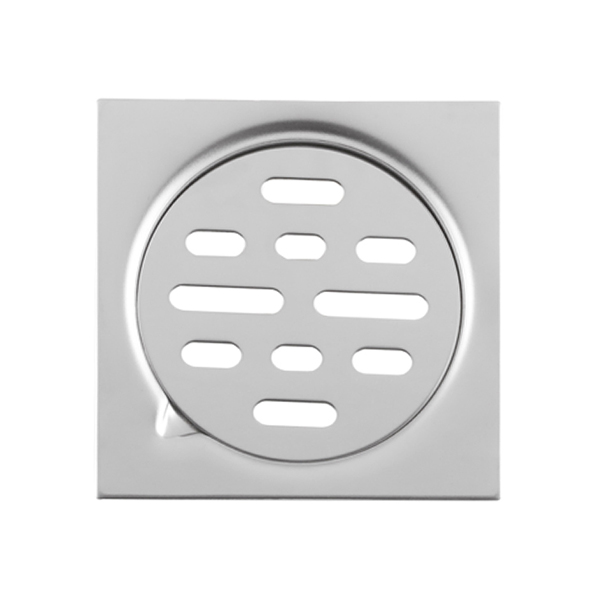
Sewer gas rising through a floor drain is one of those building problems that generates complaints before anyone can identify the source. The smell is distinctive and unpleasant, and its intermittent nature makes it genuinely difficult to diagnose without understanding why it happens in the first place. Anti Odor Floor Drains address this through several different mechanical approaches, and the mechanism that works in one application may be inadequate or impractical in another. Understanding how each approach functions — and where its limits are — is what allows building designers, contractors, and procurement teams to specify the right drain rather than replace the wrong one repeatedly.
Under normal conditions, the water in a drain trap forms a sealed barrier between the interior of a building and the drainage system below. Sewer gases — a mix of hydrogen sulfide, methane, ammonia, and other compounds — are present in any connected drainage network, and the trap water prevents those gases from rising into occupied spaces. The seal fails when that water is no longer there.
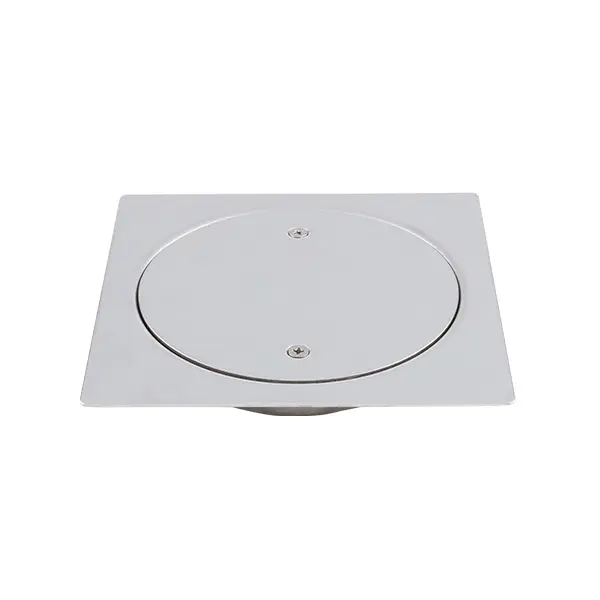
Several conditions remove or bypass the water seal:
Any drain design that prevents these failure modes from occurring will prevent odor. The question is which mechanism achieves that prevention reliably in a given installation context.
The water seal trap — in its P-trap or U-trap configuration — is the foundational odor prevention approach in drainage engineering. The trap retains a standing volume of water that blocks gas passage without requiring any mechanical movement or maintenance intervention.
How it works in practice:
The P-trap works consistently well in frequently used drains where the water is refreshed regularly. Its limitation is exactly what you would expect — infrequent use allows evaporation to defeat the seal. A bathroom or kitchen drain used daily almost never develops evaporation odor problems. A floor drain in a plant room, parking structure, or corridor used once a month frequently does.
Some installations address this by adding a trap primer — a mechanical device that introduces a small volume of water into the trap periodically, maintaining the seal regardless of use frequency. This works but adds complexity and a maintenance requirement.
Where evaporation is a predictable problem — drains in infrequently used spaces, outdoor drains with high evaporation exposure, or drains in climates with wide seasonal humidity variation — passive water seals are supplemented or replaced by mechanical sealing mechanisms that do not depend on retained water.
Silicone membrane seals are a different mechanical approach that combines flexibility with passive sealing. The membrane is normally held closed by its own elasticity and by any back pressure from the drain system. Water pressure from above flexes it open; when water stops flowing, the membrane returns to its closed position.
The advantages of this approach over spring mechanisms:
The limitation of membrane seals is that they are susceptible to mechanical damage from debris passing through the drain. A membrane that has been partially torn or permanently deformed by sharp debris loses its sealing integrity in a way that is not immediately visible but causes persistent low-level odor.
Magnetic sealing in floor drains uses opposing magnets on a sealing disk and its housing to hold the seal closed. The magnetic attraction provides a closing force that is independent of flow direction, which means the seal resists both upward gas pressure and the tendency of debris to hold mechanical valves partially open.
Where magnetic seals work well:
Where they are less effective:
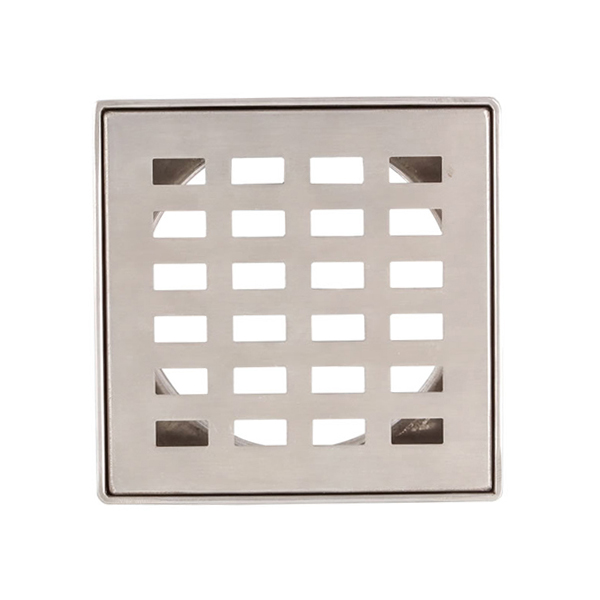
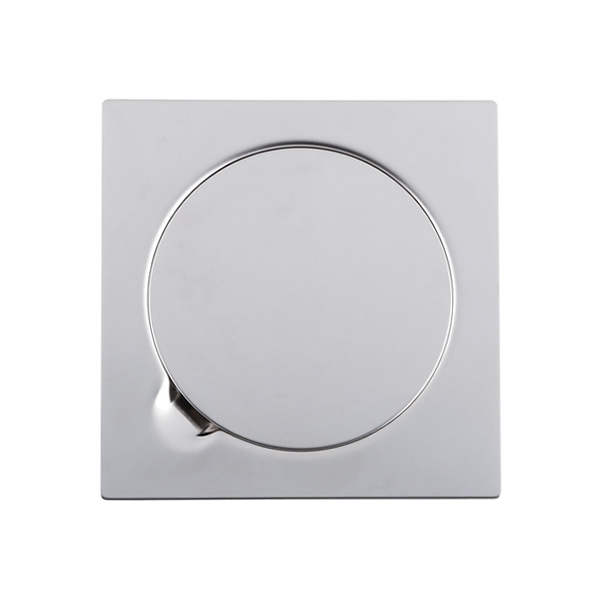
Tile insert floor drains are designed to accept a tile insert on the top surface, making the drain effectively invisible in the floor finish. These are used extensively in residential bathrooms, hospitality spaces, and high-end commercial interiors where a visible drain grate would interrupt the floor design.
The odor prevention mechanism in tile insert designs is typically a combination approach:
For bathroom tile floor drain installations, the aesthetic integration with the floor finish creates a different installation constraint than a standard grate drain. The drain body needs to be set at a precise height relative to the finished floor level to ensure the tile insert sits flush without a ridge or recess.
Floor drains for commercial buildings carry different loads than residential drainage. Kitchen drains handle grease, food particles, and cleaning chemical waste. Industrial drains carry process fluids, solvents, or contaminated rinse water. The higher contamination levels and more aggressive chemical environments change which odor prevention mechanisms remain reliable.
Considerations specific to commercial floor drain installations:
The drain specification for commercial buildings almost always requires both odor prevention and drainage capacity that exceeds residential standards. Anti clog floor drain designs that incorporate debris screening above the sealing element address the combined requirement — they prevent clogging that would back up flow, and prevent odor when flow is absent.
Selecting the right mechanism for a specific installation requires matching the mechanism's operating principles to the actual conditions of the installation.
| Mechanism Type | Reliability Without Use | Debris Tolerance | Chemical Resistance | Maintenance Need | Typical Application |
|---|---|---|---|---|---|
| Water seal trap | Low — evaporation defeats seal | High | High — no moving parts | Low with frequent use | Standard residential and commercial drains |
| Spring core insert | High — mechanical closure | Moderate — debris can jam spring | Moderate — spring corrosion possible | Low to moderate | Infrequently used interior drains |
| Weighted flap valve | High | Moderate | Moderate | Low | Light commercial, residential |
| Silicone membrane | High | Lower — membrane damage risk | High with correct material | Low | General interior applications |
| Magnetic seal | High | Moderate — coating reduces force | High | Low | Higher-debris environments |
| Tile insert with dual seal | High | Moderate | Moderate to high | Low | Residential, hospitality, high-end commercial |
| Anti clog with integrated seal | High | High — screening above seal | Material-dependent | Moderate | Commercial kitchens, food processing |
Reading across this overview, no single mechanism is universally appropriate. The installation context — how often the drain is used, what flows through it, the chemical environment, and the aesthetic requirements — determines which mechanism actually performs reliably over the drain's service life.
Residential bathrooms: Standard water seal traps with P-trap below the floor work well in showers and bathroom floor drains that are used daily. Tile insert formats provide aesthetic integration. In less-used bathrooms, supplementary mechanical seals prevent evaporation odor.
Kitchen floor drains — residential and commercial: The combination of frequent use and grease load makes cleanable, accessible designs important. Spring or membrane inserts that can be removed for cleaning are preferable to fixed sealing elements that accumulate grease in their sealing surfaces.
Parking structures and industrial facilities: Outdoor floor drain and parking drain applications face wide temperature variation, UV exposure, and contact with automotive fluids. Stainless steel bodies with chemical-resistant sealing elements, combined with mechanical closure mechanisms that do not depend on retained water that may freeze in cold climates, suit these applications.
Hospitality and healthcare: High standards for odor control and surface hygiene favor tile insert or flush-face drain designs with reliable mechanical sealing, combined with stainless steel body construction that tolerates aggressive cleaning protocols.
For buyers specifying floor drains for new construction or renovation projects, the odor prevention mechanism is one specification dimension among several, but it is the one most likely to generate occupant complaints if underspecified.
Specification points worth verifying:
Odor prevention in floor drain design is not a single solved problem — it is a range of engineering approaches that each solve the problem in different ways, with different reliability profiles across different operating conditions. Water seals work reliably in frequently used drains but fail where use is infrequent. Spring and membrane mechanisms provide reliable closure without water but introduce their own maintenance considerations. Magnetic seals add robustness where debris would jam simpler mechanisms. The right specification matches the mechanism to the actual conditions of each drain location rather than applying a single approach across a full project regardless of how conditions vary between spaces. Yuhuan Better Machinery Co., Ltd. manufactures a range of floor drain products including Anti Odor Floor Drain designs with spring core, silicone membrane, and mechanical sealing configurations, alongside stainless steel drain bodies, tile insert formats, and commercial building floor drain systems. For procurement teams specifying drain products for residential, hospitality, commercial, or industrial projects, reaching out to their team with project requirements and application context provides the basis for matched product recommendations and sourcing support.
Copyright © Yuhuan Better Machinery Co., Ltd. All rights reserved

 English
 Español
 عربى
عربى

 +86-576-87422105
 +86-576-87422322
 Xuancheng rd 32#, Yuhuan Economic Development Zone, Zhejiang, China