Become your trusted floor drain product partner and supplier in China.
Tel: +86-576-87422105, Email: [email protected]

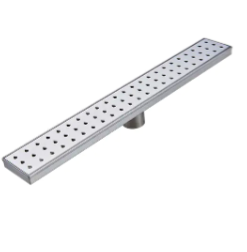
In a walk in shower, water does not really behave in a fixed way. It spreads, slows down, and then starts to gather depending on how the floor is shaped. Because of that, the position of a linear shower drain is usually not something decided on its own. It ends up being part of the whole floor idea.
Sometimes the floor already gives a clear direction. A slight tilt is enough to pull water toward one side. When that happens, the drain just follows what the surface is doing. It feels more like a match between structure and water movement rather than a strict placement rule.
A linear shower drain factory usually prepares different shapes and installation options because bathroom layouts vary a lot. Some spaces are narrow, some open, some sit next to walls in different ways. The drain structure has to stay flexible enough to fit those situations without forcing a single pattern.
Water in a shower rarely stays where it lands. It moves outward, then starts to change direction once it hits the floor. Gravity takes over slowly, but the path it follows depends on surface angle and surrounding edges.
In open walk in showers, water can spread a bit more freely. There is no strong barrier stopping it, so it travels across the floor before settling. That is usually where the linear shower drain becomes important, since it gives water a clear line to follow.
The flow is not always predictable, but some patterns show up often:
These patterns are not strict rules, but they help when deciding where the drain line makes sense in the layout.
There is no single fixed position that works everywhere. The placement usually comes from how the shower space is built.
Near the entrance is one area that is often considered. Water that tries to move outward can be caught early there, before it reaches dry zones. It also creates a clearer separation between wet and dry areas without extra barriers.
Along the wall is another common choice. In that case, the floor naturally guides water in one direction. The drain sits quietly at the edge, collecting water without interrupting movement across the main walking space.
Some layouts use a central position. This usually happens when the shower space is wide enough that water spreads in more than one direction. The drain becomes a middle collection line instead of a side boundary.
Each placement changes how water behaves slightly, so the decision usually comes from the room shape rather than preference alone.
The slope under the surface is doing more work than it looks. Even a small angle changes how water moves across the floor.
If the slope leans in one direction, water follows that path without needing extra guidance. The linear shower drain simply sits at the end of that path. When the slope is split into two directions, water divides and meets in the middle line.
There are also cases where the slope is adjusted in small sections, especially around tile layouts. It is not always a smooth single direction. Sometimes it bends slightly depending on how the floor is structured.
If the slope and drain position are not aligned, water may drift away from the intended line. That usually shows up as small puddles or slow drainage in certain spots.
The surrounding structure of the shower changes how water behaves more than it seems at first.
A glass panel on one side can hold water within a certain zone. A partial wall can do something similar, but leaves more open space for movement. In fully open layouts, water is free to travel further before it slows down.
Because of that, the placement of a linear shower drain is often tied to where water naturally stops spreading. The edge of the enclosure becomes a reference point, not a strict boundary, but something that helps judge distance.
When the drain is too close to the open side, water may pass it before turning. When it is too far inside, water has to travel back, which changes the natural flow.
Before the drain is placed, the floor underneath is already shaping what will happen later. The base layer is not flat in most cases. It is gently adjusted so water knows where to go.
On top of that, waterproofing layers are added. They are not visible later, but they hold the structure together and keep moisture under control.
During this stage, alignment matters more than appearance. The drain channel has to sit in a way that matches the slope direction. Tile layout also plays a role because lines on the surface can either support or interrupt water movement.
A linear shower drain factory often designs the body so it can adapt to different base conditions. That way, installation does not rely on one fixed environment.
Space changes everything in a shower layout.
In smaller areas, water reaches boundaries quickly. There is less room for spreading, so the drain position tends to sit closer to where water naturally gathers.
In wider spaces, water spreads before it settles. That gives more freedom in placement, but also requires more attention to how the slope is shaped.
Irregular layouts behave differently again. Water may move in uneven paths, depending on corners, edges, or changes in direction. The drain position in those cases usually follows the most stable water path rather than a geometric center.
The length of a linear shower drain is usually matched with the width of the shower floor. If it is too short for the space, water may pass around it. If it is too long for a narrow layout, it becomes harder to align with tiles.
So the choice often depends on how the floor is divided visually. Tile lines, edges, and walking space all play a role in deciding how the drain sits.
Different linear shower drain factory designs allow variations in length and structure so the same concept can fit different bathroom conditions.
Below the floor, things become more fixed. Pipes already have direction, depth, and limits that cannot always be changed easily.
The drain position has to match that hidden structure. If the outlet is placed on one side, the drain usually follows that direction. If it sits in a central point, the layout adjusts around it.
Even though this part is not visible later, it often decides where the drain ends up more than surface design does.
Different materials used in a linear shower drain behave in slightly different ways when placed into real bathroom environments. The choice is often connected with installation needs, surface style, and how the floor structure is built.
Below is a simple comparison of common material behavior in practical use:
| Material Type | Surface Behavior in Wet Area | Installation Flexibility | Structural Feel After Installation | Typical Application Situation |
|---|---|---|---|---|
| Stainless Steel | Stable surface, consistent appearance over time | Fits different floor layouts with fewer adjustments | Feels balanced within tile structure | Walk in showers with regular or open layouts |
| Brass | Slightly heavier structure, distinct surface tone | Needs more careful alignment during installation | Feels solid with stronger visual presence | Bathrooms with decorative or traditional style focus |
| Composite Structure | Light structural weight, adaptable surface finish | Easier adjustment during installation stage | Blends into surrounding floor design | Renovation projects with flexible layout needs |
This kind of material selection is usually not isolated from installation planning. The way a linear shower drain fits into the floor depends not only on size and position, but also on how the material interacts with surrounding tiles and waterproof layers.
A linear shower drain factory may adjust internal structure and finishing details depending on which material is used, so the same drainage concept can remain consistent across different installation conditions.
Once the shower is in use, attention naturally shifts to cleaning and maintenance. A linear shower drain is usually designed so the top cover can be removed without difficulty. That simple access point makes regular cleaning more manageable.
Inside the drain, small channels guide water toward the outlet. Over time, these areas may collect debris depending on usage. That is why the internal structure is shaped to allow straightforward access.
Placement also affects maintenance. A drain near the entrance may collect different types of residue compared to one near the wall or center. Water movement changes what gets carried into the channel.
Some practical considerations include:
A linear shower drain factory often considers these aspects during design so that internal structure remains accessible even in different installation environments.
Installation does not always go smoothly, and small misalignments can affect how water behaves later.
One common issue is when the drain position does not fully match the slope direction. In that case, water may move toward the floor but stop short of the drain line, creating uneven wet areas.
Another situation appears when the drain sits slightly off from the main water path. Water may pass beside it instead of entering directly, especially in open shower layouts.
Leveling also plays a role. If the drain body is not set evenly with the floor surface, tiles around it may create small barriers that interrupt water flow.
Typical issues seen during installation include:
These are usually not design flaws but small positioning mismatches during installation.
Behind each drain design, there is usually a process that adjusts structure for different installation needs. A linear shower drain factory does not work with a single fixed environment. Instead, it considers a range of bathroom layouts and floor conditions.
Some drains are shaped to fit narrow shower spaces where movement is limited. Others are adjusted for wider layouts where water spreads more freely. The internal structure may also change slightly depending on how water is expected to enter the channel.
Flexibility in design often comes from small structural adjustments rather than major changes. Things like edge thickness, internal slope, and cover fit can all be adapted.
This kind of adaptability helps the same drainage concept work in different construction styles without forcing a single installation pattern.
Inside production, a linear shower drain is not treated as a single rigid form. It is usually built with multiple layers or sections that work together.
The outer frame needs to align with tile surfaces, while the internal channel guides water toward the outlet. These two parts must stay balanced so the drain fits naturally into the floor.
Compatibility with installation environments depends on how well these parts interact with real construction conditions. Floors are not always perfectly uniform, so small tolerance in structure becomes important.
A linear shower drain factory often adjusts structural details so that the drain can fit into slightly different base conditions without major changes to the surrounding floor work.
Before installation begins, there is usually a planning stage where layout ideas are matched with product structure. This is where communication between design intent and manufacturing detail becomes important.
The position of the drain, floor slope direction, and tile layout are all connected. If one element changes, the others often need adjustment as well.
From the production side, adjustments may include:
A linear shower drain factory works around these variations so that installation can proceed without forcing the floor design into a single pattern.
Copyright © Yuhuan Better Machinery Co., Ltd. All rights reserved

 English
 Español
 عربى
عربى

 +86-576-87422105
 +86-576-87422322
 Xuancheng rd 32#, Yuhuan Economic Development Zone, Zhejiang, China