Become your trusted floor drain product partner and supplier in China.
Tel: +86-576-87422105, Email: [email protected]

Bathroom drainage has changed a lot in recent years. In many projects, the focus is no longer limited to how fast water disappears. People also care about how the floor looks, how the space feels when you walk in, and whether cleaning will be simple later on.
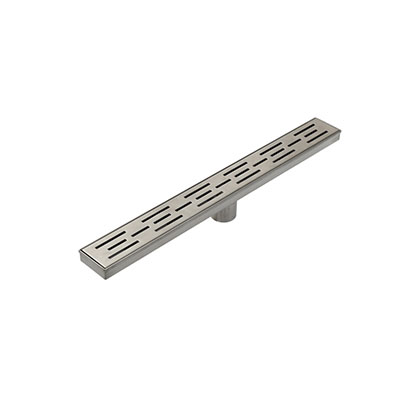
That is one reason China linear shower drain products appear more often in bathroom planning. The drain is not only a functional part hidden in the floor. It also affects slope layout, tile arrangement, and the overall look of the shower area.
What people usually care about is practical: whether it fits the space, whether it is easy to install, whether it works smoothly in daily use, and whether it stays easy to maintain after the bathroom is finished.
The difference between a linear drain and a traditional point drain is easy to notice once you look at the floor plan. One collects water along a long opening. The other gathers it into a single center point. That small structural change affects several parts of the bathroom.
In daily design work, this usually means:
In many modern spaces, a China linear shower drain is placed near a wall or along one side of the shower zone. That gives the floor a more continuous appearance and helps the room feel less crowded.
Water flow is not only about the drain itself. It also depends on the floor slope, the shower area shape, and where the outlet sits. Still, a linear structure gives the water a longer receiving line, which can make the movement feel more natural.
In use, this often shows up as:
This is one reason the design is often chosen for open shower spaces. When the area is more open, water tends to spread more widely, so a longer collection line can match that pattern better.
Material choice matters because the drain sits in a wet area and gets used every day. The outer body, inner parts, and sealing pieces do not all need the same material. Each part has a different job.
| Part | Common material direction | Main role |
|---|---|---|
| Outer body | Metal-based material | Supports structure and daily contact |
| Inner flow part | Plastic or composite material | Guides water movement |
| Seal piece | Flexible material | Helps with odor control and fit |
| Surface layer | Treated finish or coating | Supports appearance stability |
In real bathroom use, people usually pay attention to how the material holds up in moisture, whether it keeps its shape, and whether it is easy to clean. A well-matched structure tends to feel more stable over time.
Length should match the space, not just the idea of the design. A compact shower area and a wider open area do not need the same drain layout. The right choice usually comes from looking at the room as a whole.
A simple way to think about it is:
| Bathroom layout | Practical direction | Main thing to check |
|---|---|---|
| Compact shower area | Keep the layout simple | Whether the drain takes too much floor space |
| Wider shower zone | Extend the collection line | Whether water coverage feels even |
| Wall-side position | Match the edge line | Whether slope direction is easy to build |
| Open shower layout | Keep the floor line smooth | Whether the room still feels balanced |
In many projects, China linear shower drain selection happens together with tile planning and waterproof work. That timing matters, because changing the drain size later can affect the rest of the floor layout.
Installing a linear drain is not only about placing the product into the floor. It connects directly with waterproofing, tile layout, and slope control, so small details during installation can affect how the system behaves later.
In practical work, attention is usually given to:
One common point is that the drain position needs to match the natural flow direction of water on the floor. If the slope and drain line are not aligned, water may slow down or collect in unwanted areas.
For China linear shower drain installations, coordination between tiling work and drainage placement is often more important than the drain itself, because the surrounding structure defines how it performs.
Odor control is not always obvious during installation, but it becomes something people notice during daily use. Since bathroom drainage connects directly to sewer pipes, the internal sealing structure plays an important role in keeping indoor air stable and comfortable.
Linear drains often use different sealing concepts, such as water-based sealing or mechanical closing structures. These solutions do not behave the same way, especially when water is not used frequently or when the bathroom stays dry for long periods.
In real usage, the design influences whether unwanted air can pass back into the room, how stable the sealing effect remains when the system is not actively running, and whether the structure continues to perform consistently over time. In some China linear shower drain designs, the internal pathway is arranged to limit direct air movement between the drainage pipe and the bathroom space, which helps maintain a more stable indoor environment even when the shower is not used regularly.
Hair and small particles are one of the most common reasons drainage speed changes over time. Even if water flows normally at the beginning, gradual buildup inside the channel can slowly affect how smoothly water moves through the system.
The purpose of a filtration structure is not only to block debris, but also to make routine cleaning easier and reduce the chance of deeper blockage forming inside the drain. Different designs approach this in slightly different ways, but the overall idea stays the same, keeping the main flow path open without requiring complicated maintenance steps.
In daily use, the experience often depends on how the cover and inner structure are arranged, whether debris stays near the surface or moves deeper into the channel, and how simple it is to restore normal flow when cleaning is needed. A well planned China linear shower drain usually separates the visible top section from the internal water path, which allows routine cleaning to stay straightforward without needing full system disassembly.
The choice of drainage system in hotels and residential spaces is often influenced by maintenance needs, space layout, and overall appearance requirements. Linear drains tend to fit well in environments where both function and visual simplicity are important.
In many projects, the reasons are quite practical:
In residential use, China linear shower drain is often selected for walk-in shower spaces where users prefer a flat and open floor feel. In hotel settings, it is commonly used because it supports consistent room design while keeping maintenance routines manageable for cleaning staff.
Over time, this type of drainage structure has become part of many modern bathroom layouts, not because it changes everything, but because it fits into different spaces without requiring major adjustments to the rest of the design.
Copyright © Yuhuan Better Machinery Co., Ltd. All rights reserved

 English
 Español
 عربى
عربى

 +86-576-87422105
 +86-576-87422322
 Xuancheng rd 32#, Yuhuan Economic Development Zone, Zhejiang, China